Software built for how your business actually runs.
A screen where your staff press a button and the thing actually happens — not a dashboard that reports a number and leaves the work where it was.
Most small operations end up with three systems that do not talk to each other and a spreadsheet doing the actual work between them. The job somebody does by hand every Tuesday afternoon is usually the one worth building.
What gets built
An admin panel your team works in
One screen for the people who run the business. The record, and the buttons that change it, in the same place — refund the customer, resend the invoice, approve the artwork, mark it shipped. Not a report that tells somebody to go and do it somewhere else.
Controls your customer service team can actually use
The things support gets asked for twenty times a week, made into buttons a non-technical person can press safely: reissue a receipt, extend a trial, correct an address, look up what was really sent and when. The alternative is a developer doing it by hand in a database, which is slow on a good day and a disaster on a bad one.
A portal for your customers
The same system seen from the other side, with its own login and nothing else visible. They approve the proof, ask for the change, see where the order is, download the receipt — instead of calling to ask, which is a job for somebody either way.
The back end underneath both
Payments, invoicing, email that sends reliably, files stored where they can be found, a log of who did what and when. The unglamorous half, and the half that decides whether the rest can be trusted.
This is not a pitch deck
Three systems, running now, with real users. The first one is how this company quoted, invoiced and proofed the job you would be hiring it for.
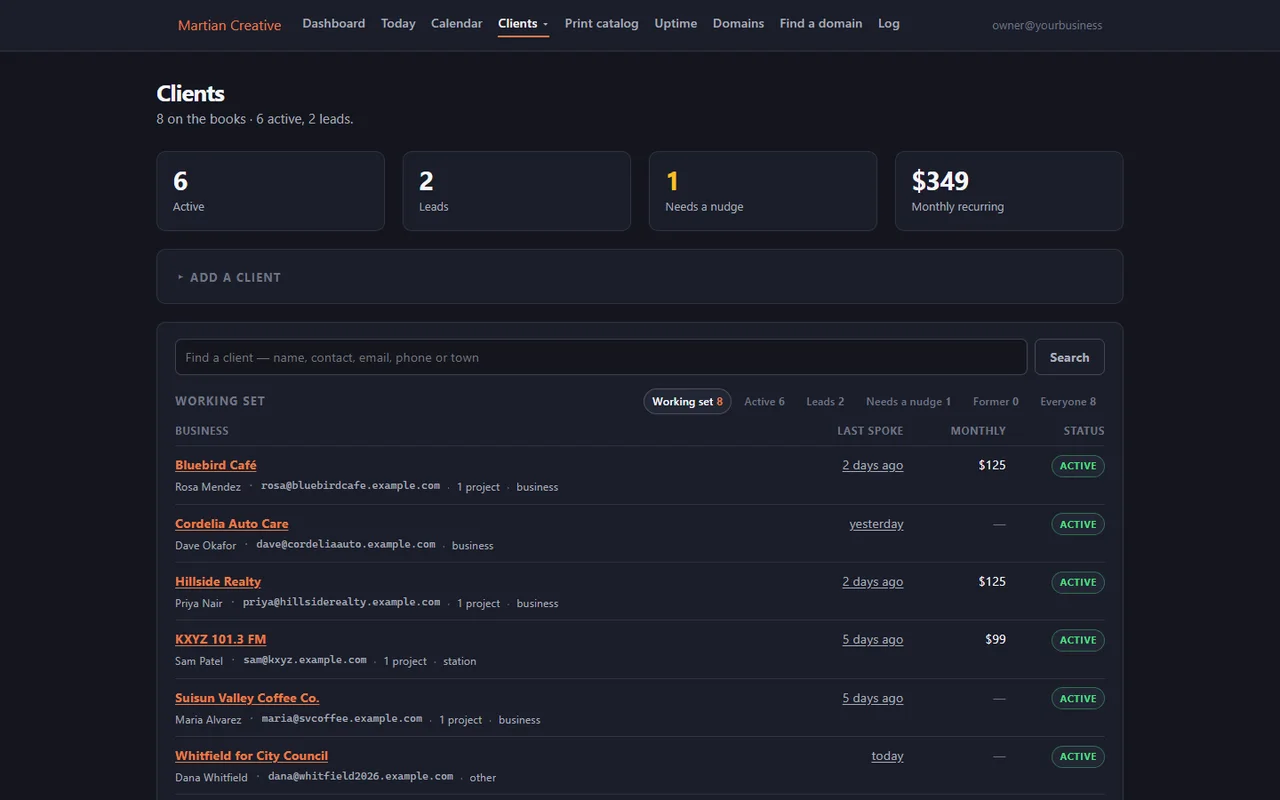
The panel this company runs on
Quotes, signed agreements, Stripe invoices, print orders, artwork proofs the client approves from a link, supplier costs, margin per job and uptime monitoring on every client site. Every invoice this business has sent went through it.
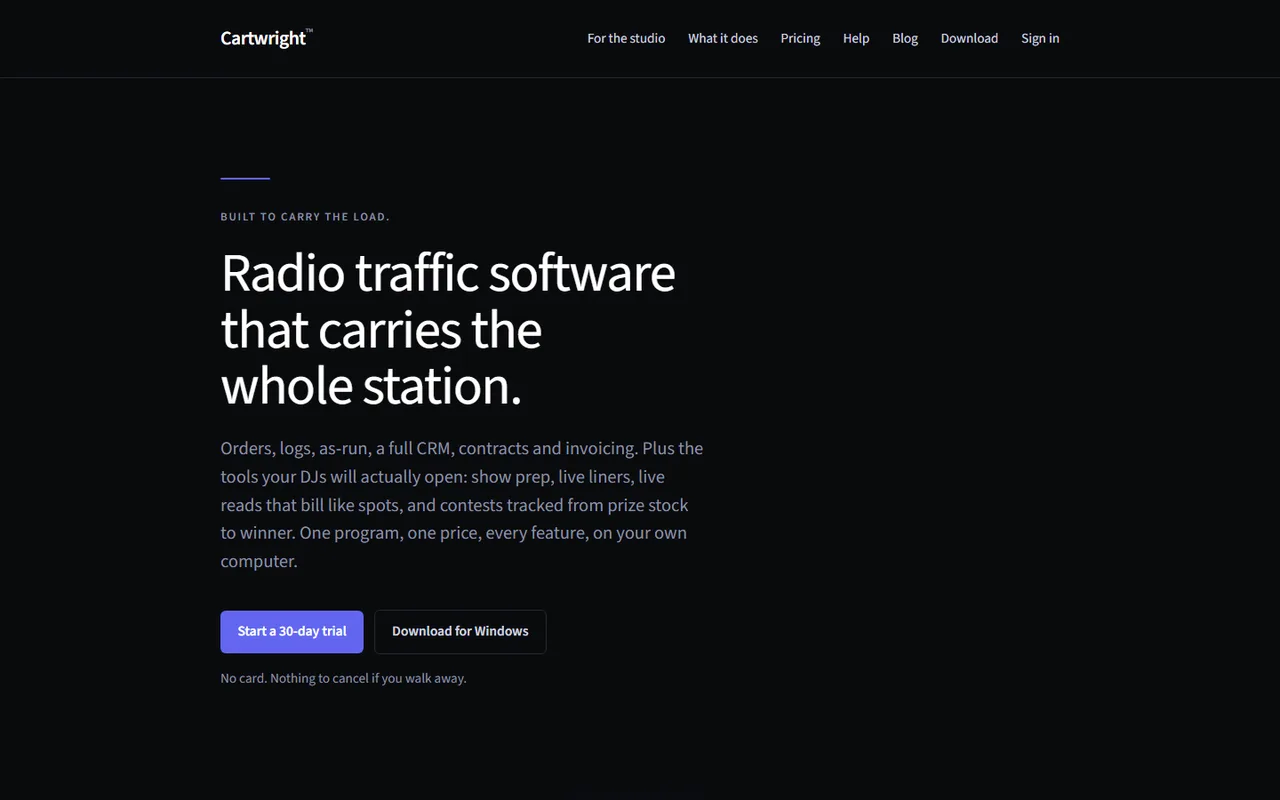
Cartwright
Traffic, scheduling, as-run reconciliation and billing, running in radio stations on their own machines. Sold as a product, which is a harder test than building one for a single client.
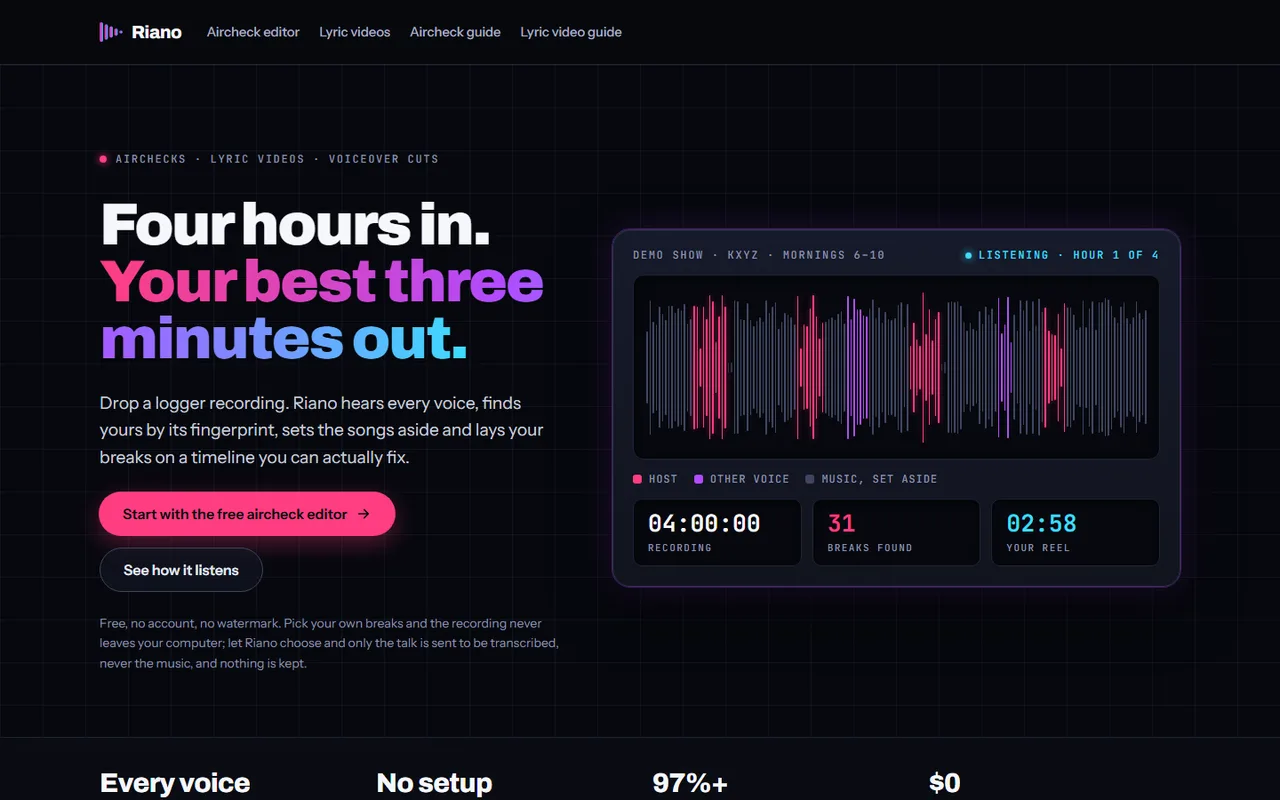
Riano
An AI video editor that takes payments, at riano.studio. Built, shipped and earning inside a year.
What it costs
Every system is quoted.
Every other price on this site is published, and this one is not — because a single number that covers both "add an approval step" and "replace what the office runs on" is not a price, it is a guess. What can be published is exactly what happens instead:
- A conversation about what the job actually is — usually an hour, and usually the useful part is what you already do by hand.
- A written quote: the work itself, what it costs, and what is explicitly out of scope.
- A fixed price, agreed before anything starts, rather than an estimate that grows.
- Built in pieces you can see working, so the first time you use it is not the day it is finished.
Worth saying before you call
- Work this small is quoted, not published, because the range is real: a single control added to something that exists is not the same job as replacing what the office runs on.
- Software needs looking after. Hosting, changes and support are quoted with the build rather than discovered afterwards.
- If what you need is a website, that is a different product with a published price.
Start
Email hello@martiancreative.com or call (707) 761-0350 and describe the job somebody is currently doing by hand. That is enough to begin, and the first conversation is free whether or not anything comes of it.
Martian Creative, LLCFairfield, California · (707) 761-0350